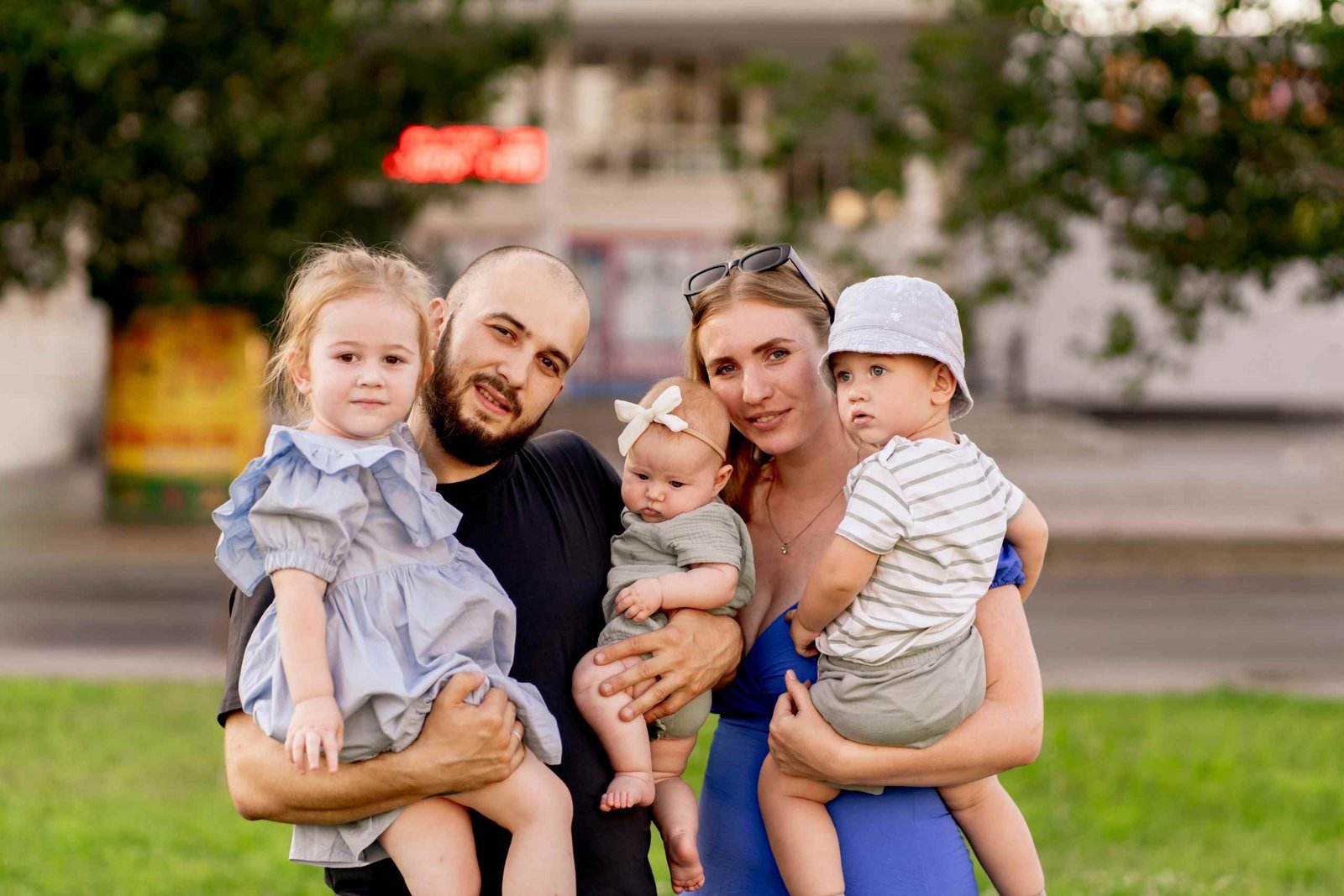
How Sibling DNA Works Between Brothers and Sisters


Siblings share DNA, but not in identical amounts. Each child receives 50% of their genetic material from each parent. However, which specific segments they inherit varies greatly. Full siblings typically share about 50% of their DNA on average. This percentage can range from 38% to 61% in reality.
Genetic inheritance follows random patterns during reproduction. When parents create reproductive cells, their chromosomes mix and match. This process is called genetic recombination. Each egg and sperm carries a unique combination. Therefore, each child receives different genetic segments from the same parents.
Brothers and sisters inherit different portions of parental DNA. One sibling might get more genetic material from the mother. Another might receive more from the father. The specific genes passed down determine physical traits. These include eye color, hair texture, and height potential.
DNA sharing between siblings creates both similarities and differences. They may look alike in some features. Yet they differ dramatically in other characteristics. This variation explains why full siblings don’t appear identical. Only identical twins share 100% of their DNA.
The science behind sibling DNA reveals fascinating patterns. Genetic testing can measure exact sharing percentages. These tests analyze chromosomal segments across the genome. Results show precise DNA matches between family members. Such information helps people trace ancestry and relationships.
Genetic Differences Between Full and Half Siblings

Full siblings share both biological parents. Half siblings share only one parent. This fundamental difference affects DNA sharing significantly. Full siblings inherit genetic material from the same two sources. Half siblings have one common genetic source only.
DNA Percentage Shared by Full Siblings
Full siblings share approximately 50% of their DNA. This average comes from inheriting from identical parents. Each parent contributes 23 chromosomes to each child. The specific chromosomes vary between children, though. Some siblings share 45% while others share 55%.
Genetic recombination creates this variability in DNA sharing. During meiosis, parent chromosomes exchange genetic segments. This mixing produces unique combinations in each child. Therefore, no two full siblings share identical DNA portions.
DNA testing confirms these genetic sharing patterns precisely. Companies analyze thousands of genetic markers across chromosomes. They calculate exact DNA match percentages between individuals. These results prove sibling relationships with high accuracy.
DNA Percentage Shared by Half Siblings
Half siblings share approximately 25% of their DNA. They inherit genetic material from one common parent. The other parent contributes completely different genetic information. This reduces the overall DNA similarity by half.
Half sibling DNA relationships show more variation than full siblings. The shared percentage can range from 18% to 32%. Factors include which genetic segments the common parent passed down. Random genetic recombination affects these outcomes significantly.
Genetic testing distinguishes half siblings from full siblings easily. The amount of shared DNA clearly indicates relationship types. Half siblings cluster around 25% sharing on DNA tests. Full siblings cluster around 50% sharing instead.
“My brother and I took a DNA test last year. We discovered we share 52% of our genetic material. This explained why we look so similar.” – Marcus Thompson
Why Siblings Look Different Despite Shared DNA
Siblings often look remarkably different from each other. This occurs despite sharing significant genetic material. Several biological factors explain these physical variations. Genetic expression, environmental influences, and random mutations all contribute.
Each person inherits approximately 20,000 to 25,000 genes. However, only specific genes determine particular traits. Siblings may inherit different versions of these trait-determining genes. One child might get the mother’s nose gene. Another might inherit the father’s nose gene instead.
Dominant and recessive genes play crucial roles here. A child needs only one dominant gene copy to express it. Recessive genes require two copies for expression. Siblings inherit different combinations of these gene types. This creates varied physical appearances between them.
Gene expression varies even with identical genetic material. Environmental factors influence how genes activate or suppress. Nutrition, stress, and lifestyle affect genetic expression patterns. Two siblings with similar DNA may develop differently. Their bodies express their shared genes in unique ways.
Random genetic mutations occur during development too. These tiny changes affect how traits manifest physically. Even identical twins accumulate different mutations over time. This explains why they show subtle differences despite sharing all DNA.
Chromosomes and How They Determine Sibling DNA Similarity
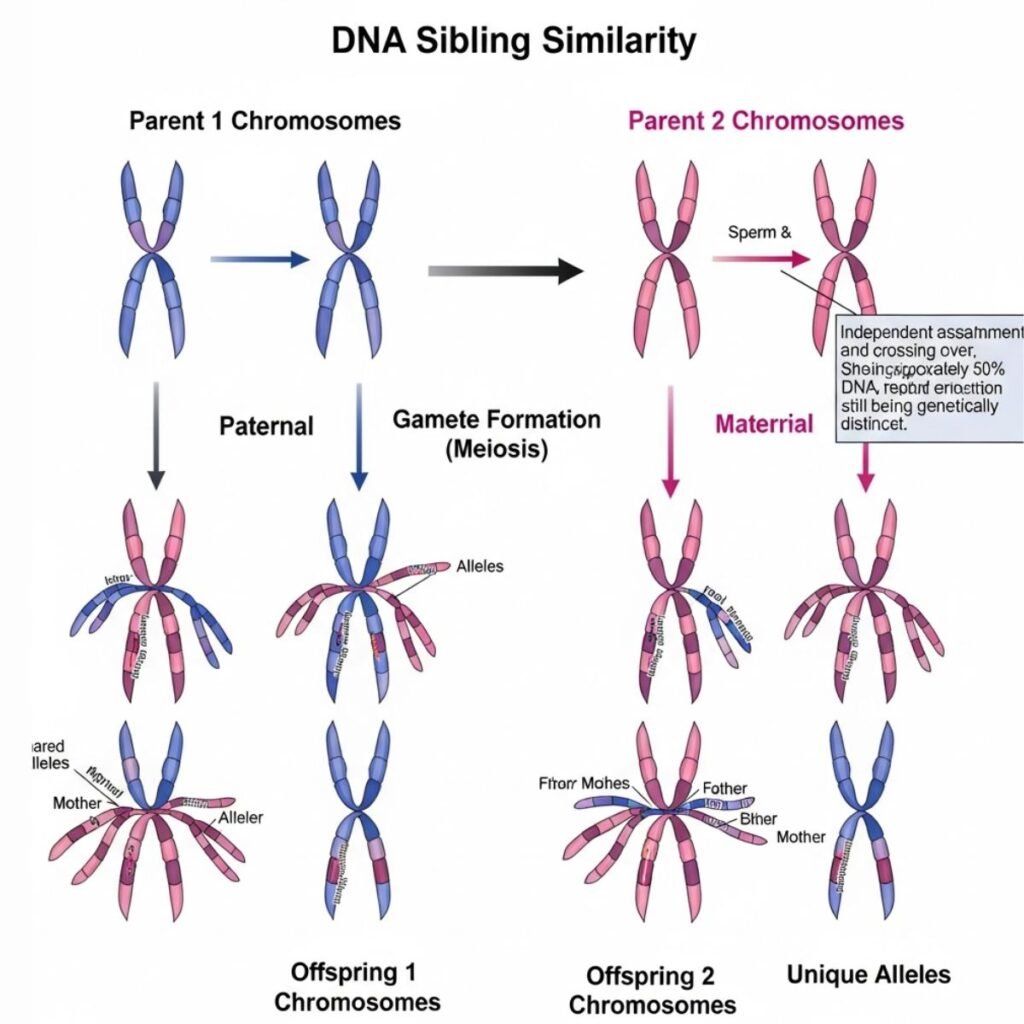
Humans possess 23 pairs of chromosomes in each cell. Twenty-two pairs are called autosomes. The twenty-third pair consists of sex chromosomes. Parents pass one chromosome from each pair to offspring.
Chromosomal inheritance follows predictable yet random patterns. Each parent’s chromosome pairs separate during reproductive cell formation. One chromosome from each pair enters the egg or sperm. When fertilization occurs, the child receives 23 chromosomes from each parent.
Siblings receive different chromosomes from the same parental pairs. For example, a mother has two copies of chromosome 7. She passes one copy to her first child. She passes the other copy to her second child. Sometimes she passes the same copy to both children.
Genetic recombination occurs before chromosome separation. Parent chromosomes exchange genetic segments during this process. This creates new chromosome combinations never seen before. Each chromosome becomes a unique blend of grandparental DNA.
Autosomal DNA Sharing in Siblings
Autosomal DNA refers to the 22 non-sex chromosome pairs. Siblings share roughly 50% of their autosomal DNA. This sharing happens across all 22 chromosome pairs. Each pair contributes differently to overall genetic similarity.
DNA segments inherited from each chromosome vary in size. Large segments indicate recent common ancestry. Smaller segments suggest more distant shared ancestors. Siblings typically share many large DNA segments together.
Genetic testing maps these shared autosomal DNA segments precisely. Results display which chromosomal regions match between siblings. These visual representations help people confirm biological relationships. They also reveal specific genetic connections to ancestors.
Sex Chromosomes and Sibling DNA
Sex chromosomes (X and Y) follow different inheritance rules. Females possess two X chromosomes. Males possess one X and one Y chromosome. These patterns affect DNA sharing between siblings.
Sisters share more DNA than brothers potentially do. Both inherit X chromosomes from their mother. They share this entire maternal X chromosome completely. Brothers inherit different genetic material from their mother’s X.
Brothers share their father’s Y chromosome identically. This chromosome passes unchanged from father to son. Sisters don’t receive Y chromosomes at all. This creates unique genetic patterns among different sibling gender combinations.
Identical Twins Versus Fraternal Twins DNA Comparison
Identical twins form from one fertilized egg. That egg splits into two separate embryos early on. Both embryos carry identical genetic material at conception. They share 100% of their DNA initially.
Fraternal twins develop from two separate fertilized eggs. Each egg fertilizes independently and develops simultaneously. Fraternal twins share DNA like regular siblings do. They inherit approximately 50% of shared genetic material.
| Twin Type | DNA Shared | Formation Process |
| Identical Twins | ~100% | Single egg splits |
| Fraternal Twins | ~50% | Two separate eggs |
| Regular Siblings | ~50% | Born at different times |
Identical twins may develop slight genetic differences over time. Random mutations occur throughout life in body cells. Environmental factors cause DNA changes too. These modifications remain extremely small, though. Identical twins still share virtually all their DNA.
Fraternal twins show the same genetic variation as regular siblings. They simply develop in the womb simultaneously. Birth timing doesn’t affect DNA sharing percentages. Their genetic relationship remains equivalent to regular brothers and sisters.
Genetic Testing Methods for Determining Sibling Relationships
DNA testing companies use sophisticated technology to analyze genetic material. They examine specific locations across all chromosomes. These locations are called genetic markers or SNPs. Single nucleotide polymorphisms (SNPs) vary between individuals significantly.Similar laboratory methods are also used in other specialized tests, such as a Drug Test for Child, where accuracy and reliability are equally critical.
Autosomal DNA tests analyze markers from all 22 non-sex chromosomes. These tests calculate total DNA shared between individuals. Results express similarity as a percentage of matching genetic markers. The percentage indicates relationship types accurately.
Sibling DNA tests compare thousands or millions of genetic markers. Computers analyze which markers match between two samples. They calculate the total length of matching DNA segments. This information determines the relationship likelihood statistically.
How DNA Testing Companies Calculate Sibling Matches
Companies use complex algorithms to determine sibling relationships. They compare DNA segment lengths and quantities between samples. Longer shared segments indicate closer biological relationships. More shared segments also suggest closer family connections.
Genetic testing platforms establish confidence levels for each relationship type. They calculate the probability of being full siblings. They also calculate half sibling probabilities separately. Results display the most likely relationship based on data.
DNA match reports show centimorgans (cM) of shared DNA. CentiMorgans measure genetic linkage between DNA segments. Full siblings typically share 2,300 to 2,900 cM. Half siblings share approximately 1,300 to 2,300 cM.
Accuracy of DNA Tests for Sibling Verification
Modern DNA testing achieves extremely high accuracy rates. Tests correctly identify full siblings over 99% of the time. Half sibling identification accuracy exceeds 95% typically. These numbers reflect significant technological advances in recent years.
Genetic testing accuracy depends on several factors. Sample quality affects results significantly. Larger genetic marker databases improve accuracy too. More markers analyzed means higher confidence in results.
False positives and negatives remain extremely rare. DNA testing companies use stringent quality control measures. They require minimum thresholds for relationship confirmation. Multiple analysts often review uncertain or borderline cases.
Maternal DNA Versus Paternal DNA Inheritance Patterns

Children inherit equal amounts of DNA from both parents. However, inheritance patterns differ between maternal and paternal genetic material. These differences affect how genetic traits pass through generations.
Maternal inheritance includes both nuclear and mitochondrial DNA. Mothers pass nuclear DNA through egg cells normally. They also pass mitochondrial DNA exclusively through maternal lineage. This mitochondrial DNA traces female ancestry specifically.
Paternal inheritance includes nuclear DNA and Y chromosome material. Fathers pass nuclear DNA through sperm cells normally. The Y chromosome passes from father to son unchanged. This traces direct male lineage through paternal lines.
Mitochondrial DNA and Sibling Relationships
Mitochondrial DNA (mtDNA) exists outside the cell nucleus. All children inherit mtDNA exclusively from their mothers. Siblings share identical mitochondrial DNA if they’re maternal siblings. This genetic material remains nearly unchanged across generations.
MtDNA testing helps verify maternal relationships specifically. It confirms whether individuals share the same mother. However, mtDNA doesn’t distinguish between full and half siblings. Both inherit the same maternal mitochondrial DNA exactly.
Mitochondrial DNA mutates very slowly over generations. Scientists use mtDNA to trace maternal ancestry lines. These tests reveal ancient female ancestors spanning thousands of years. Siblings share this entire maternal ancestral genetic heritage.
Y Chromosome DNA in Male Siblings
Male siblings inherit identical Y chromosomes from their father. This chromosome passes virtually unchanged from generation to generation. Brothers share this entire paternal Y chromosome precisely.
Y chromosome testing confirms paternal relationships between males. It verifies whether boys share the same biological father. This test doesn’t apply to female siblings obviously. Sisters don’t possess Y chromosomes at all.
Y DNA traces direct paternal lineages through history. It reveals male ancestors extending back thousands of years. Male siblings share this complete paternal ancestral line. They carry identical genetic markers from ancient forefathers.
Genetic Recombination and Its Role in Sibling DNA Diversity
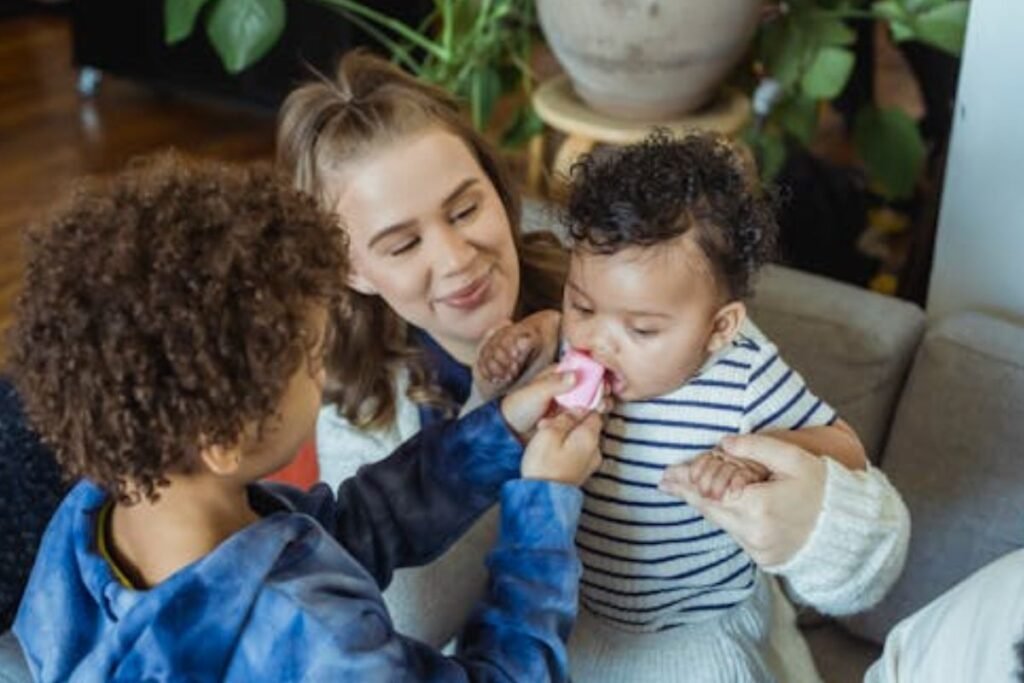
Genetic recombination creates diversity among siblings from the same parents. This process occurs during reproductive cell formation. Parent chromosomes exchange genetic segments before separating. Each resulting cell carries a unique chromosome combination.
Crossover events happen multiple times per chromosome pair. These events swap DNA segments between paired chromosomes. The exact locations of crossovers vary for each cell. This randomness ensures every egg and sperm differs genetically.
Siblings inherit different recombined chromosomes from their parents. One child might receive mostly maternal grandparent DNA. Another child might receive mostly paternal grandparent DNA. These variations create significant differences between siblings.
How Crossover Events Create Unique Genetic Combinations
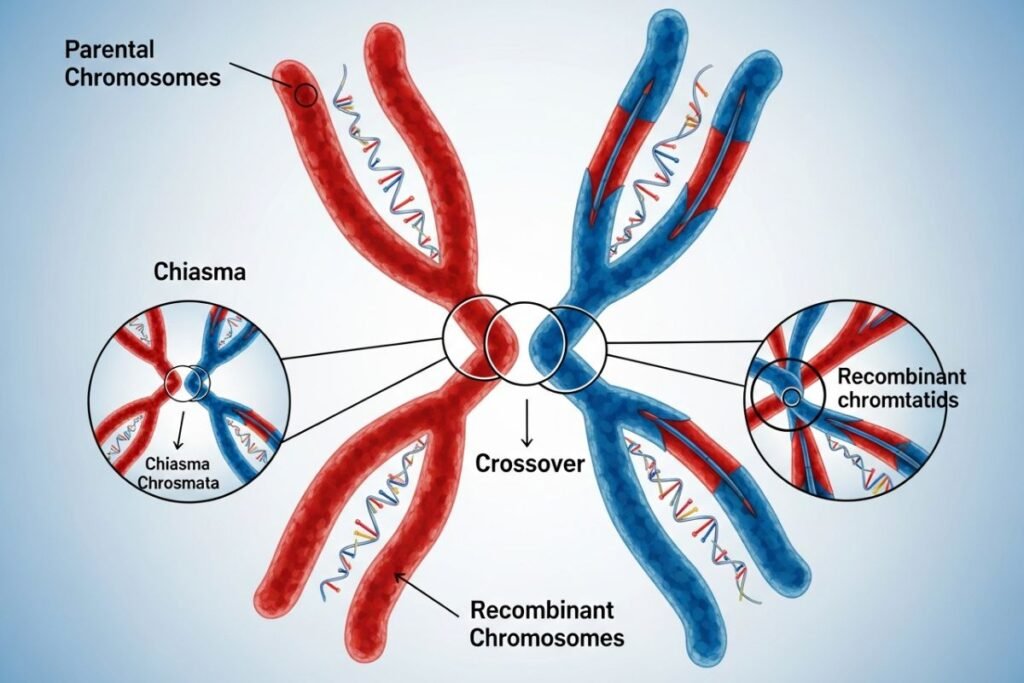
Crossover events occur during meiosis, the reproductive cell division. Paired chromosomes align closely before separating. They exchange matching DNA segments at various points. This swapping creates new chromosome versions never before existing.
Each chromosome pair experiences one to several crossover events. Longer chromosomes typically have more crossover points. These events shuffle genetic information from both grandparents. The result mixes ancestral DNA in novel ways.
Siblings receive completely different recombined chromosomes. No two reproductive cells contain identical genetic combinations. This ensures maximum genetic diversity among offspring. Nature favors this diversity for species survival advantages.
Independent Assortment of Chromosomes
Independent assortment adds another layer of genetic diversity. Each chromosome pair separates independently during cell division. The mother’s chromosome 1 goes to one cell randomly. The father’s chromosome 1 goes to another cell.
This random distribution applies to all 23 chromosome pairs. Each pair separates without influencing other pairs. The possible combinations reach astronomical numbers. Specifically, 2^23 or over 8 million possible combinations exist.
Siblings inherit different combinations of parental chromosomes. One child might receive mostly the mother’s chromosomes. Another might receive a balanced mix instead. This variation contributes significantly to sibling DNA differences.
How Much DNA Do Different Sibling Types Share
Sibling DNA sharing varies based on their biological relationship. Different sibling types exist within families today. Each type shares distinct genetic percentages with each other.
| Relationship Type | Average DNA Shared | Range |
| Identical Twins | 100% | 99.9-100% |
| Full Siblings | 50% | 38-61% |
| Half Siblings | 25% | 18-32% |
| Step-siblings | 0% | 0% |
| Adoptive Siblings | 0% | 0% |
Full siblings share both biological parents completely. They inherit genetic material from identical sources. Half siblings share only one biological parent. Their DNA sharing reflects this reduced common ancestry.
Step-siblings share no biological parents at all. They have zero genetic connection to each other. Adoptive siblings also lack biological DNA relationships. Family bonds exist without genetic ties in these cases.
DNA Sharing Among Three-Quarter Siblings
Three-quarter siblings represent an unusual relationship type. These siblings share one parent completely. They also share half of the other parent. This occurs when parents are themselves closely related.
For example, two brothers marry two sisters. Their children become three-quarter siblings to each other. These children share approximately 37.5% of their DNA. This percentage falls between half and full siblings.
Genetic testing can identify three-quarter sibling relationships accurately. The DNA percentage clearly distinguishes them from standard relationships. Such situations remain rare but do occur occasionally.
Double First Cousins and DNA Sharing
Double first cousins occur when two siblings marry two siblings. Their children share both sets of grandparents. These cousins share approximately 25% of their DNA. This equals typical half sibling DNA sharing amounts.
Genetic testing may confuse double first cousins with half siblings. Both relationships share similar DNA percentages. Additional family information helps distinguish between them. Testing other family members clarifies the true relationship.
Double first cousin relationships show how complex genetic connections become. Family trees intertwine in unexpected ways sometimes. DNA testing reveals these hidden genetic relationships clearly.
Ethnicity Estimates and How They Differ Among Siblings
DNA testing companies provide ethnicity breakdowns from genetic material. These estimates analyze ancient ancestral origins. Surprisingly, siblings often receive different ethnicity percentages. This occurs despite sharing similar overall DNA.
Siblings inherit different genetic segments from each parent. Parents themselves carry mixed ancestral DNA. One child might inherit more of one ethnicity. Another child might inherit more of another ethnicity.
Ethnicity estimates remain approximations, not exact measurements. Companies compare your DNA against reference populations. These reference groups represent different geographical ancestral origins. Small genetic differences between siblings affect results.
Why Sibling Ethnicity Results Vary
Genetic inheritance follows random patterns as described earlier. Each parent passes down different ancestral DNA segments. One sibling might inherit more African DNA segments. Another might inherit more European DNA segments instead.
Ethnicity testing analyzes specific genetic markers associated with regions. These markers trace back thousands of years ancestrally. Siblings inherit different combinations of these ancestral markers. Therefore, their ethnicity breakdowns differ somewhat.
The differences usually remain relatively small, though. Siblings show similar major ethnicity categories generally. Minor percentages might vary by 5-10% typically. Dramatic differences would indicate testing errors or unusual circumstances.
Improving Ethnicity Estimate Accuracy
DNA testing companies continuously update their ethnicity algorithms. They expand reference population databases regularly. More data improves accuracy for all customers. Siblings may see their percentages change over time.
Testing multiple siblings helps clarify family ancestry better. Combining sibling results provides a fuller picture. It reveals the complete range of ancestral DNA. Parents passed various genetic segments to different children.
Ethnicity estimates should be viewed as educational tools. They provide interesting ancestral insights generally. However, they aren’t perfectly precise measurements. Genetic genealogy remains an evolving scientific field currently.
Genetic Health Conditions and Sibling Risk Factors
Siblings may inherit different genetic health predispositions. Many conditions result from specific gene variants. Inheriting certain variants increases disease risk significantly. However, siblings don’t always inherit identical risk genes.
Recessive genetic conditions require two copies of a variant. Both parents must carry the variant for children. Each child has a 25% chance of inheriting both copies. Siblings may have the condition while others don’t.
Dominant genetic conditions require only one variant copy. If a parent carries it, each child faces 50% risk. Some siblings inherit the variant while others don’t. This creates different health outcomes within one family.
Carrier Status Among Siblings
Carrier status means possessing one copy of a recessive gene variant. Carriers typically don’t show symptoms themselves. However, they can pass the variant to offspring. Siblings may have different carrier statuses for conditions.
Genetic testing reveals carrier status for numerous conditions. Tests screen for hundreds of genetic disorders. Siblings might discover different carrier results surprisingly. Each inherited different genetic variants from parents.
Understanding carrier status helps with family planning decisions. People learn their risk of passing conditions on. This information becomes especially important for closely related couples. The genetic counseling helps interpret these results properly.
Genetic Predisposition Differences in Siblings
Genetic predisposition refers to inherited disease susceptibility. Many common conditions have genetic components. These include heart disease, diabetes, and certain cancers. Siblings inherit different predisposition levels for these conditions.
Polygenic conditions involve multiple genes working together. Each gene contributes small effects to overall risk. Siblings inherit different combinations of risk genes. This creates varied predisposition levels between them.
Lifestyle factors interact with genetic predispositions significantly. Even with high genetic risk, healthy choices help. Siblings with similar genetic risks may develop differently. Environment and behavior strongly influence actual outcomes.
Non-Paternity Events and Their Effect on Sibling DNA
Non-paternity events occur more commonly than people realize. These situations mean the presumed father isn’t biological. DNA testing reveals these unexpected findings sometimes. Siblings discover they’re actually half siblings instead.
Genetic testing identifies non-paternity through DNA sharing percentages. Expected full siblings share only 25% DNA instead. This strongly suggests different biological fathers. The discovery can shock families tremendously.
Studies estimate non-paternity rates between 1-4% overall. Rates vary across different populations and circumstances. Modern DNA testing uncovers these historical family secrets. Many people learn unexpected truths about their ancestry.
How DNA Tests Reveal Unexpected Sibling Relationships

DNA testing companies compare genetic material between relative matches. Their algorithms calculate relationship probabilities automatically. Unexpected results trigger additional analysis often. Companies help people interpret surprising genetic discoveries.
Siblings who share less DNA than expected need investigation. The reduced sharing indicates potential half sibling relationships. Testing additional family members helps clarify situations. Parents’ DNA provides definitive answers about paternity.
Some people prefer not knowing about non-paternity events. They choose not to pursue DNA testing for this reason. Others want complete truth about their genetic heritage. Personal preferences vary widely on these sensitive matters.
Ancient Ancestry and How Siblings Connect Differently
DNA testing traces ancestry back thousands of years. Results reveal connections to ancient populations. Interestingly, siblings may show different ancient ancestral connections. This happens because they inherited different genetic segments.
Autosomal DNA testing looks at all ancestral contributions. Each chromosome segment traces to different ancestors. Siblings inherit varied segments from the same ancestral pool. Therefore, their ancient connections differ somewhat.
Deep ancestry refers to connections over 500 years old. These connections become increasingly difficult to trace specifically. Genetic testing groups them into broad geographical categories. Siblings may differ in these ancient regional percentages.
Neanderthal DNA Variation in Siblings
Modern humans carry Neanderthal DNA from ancient interbreeding. Most people of European descent have 1-4% Neanderthal genetic material. Surprisingly, siblings show different Neanderthal DNA percentages. They inherited different genetic segments containing Neanderthal variants.
Neanderthal DNA exists in small segments throughout our chromosomes. These segments came from ancestors 40,000-60,000 years ago. Each sibling inherits a random selection of these segments. Therefore, their Neanderthal percentages differ slightly.
Genetic testing companies report Neanderthal DNA as a percentage. Results also show specific Neanderthal variants inherited. Siblings might share some variants but not others. This creates interesting conversations about ancient human history.
Regional Ancestral DNA Differences
Siblings may connect to different ancestral regions unexpectedly. One might show stronger connections to certain areas. Another shows stronger connections to different regions instead. Both inherited authentic ancestral DNA from shared parents.
These differences reflect random genetic inheritance patterns. Parents carry DNA from numerous ancestral sources. Children sample different portions of this ancestral mosaic. No child receives the complete ancestral picture alone.
Testing multiple siblings provides comprehensive family ancestry views. Combining results reveals the full ancestral diversity present. Parents passed varied genetic segments to different children. Together, siblings carry their complete family genetic heritage.
Aashley Kai is the Editorial Director of Chelsea Famous Parenting and a licensed expert in early childhood education. She holds a Master’s in Child Psychology from the University of Texas Southwestern Medical Center and has worked as a preschool teacher and child therapist. Since joining in 2024, Aashley has been dedicated to creating well-researched, trustworthy parenting resources. Her work helps parents and caregivers foster nurturing, educational environments for children. Outside of work, she enjoys hiking and photography, capturing nature from a child’s perspective.