
Difference Between Gas Bubbles and Baby Moving: How to Tell the Difference

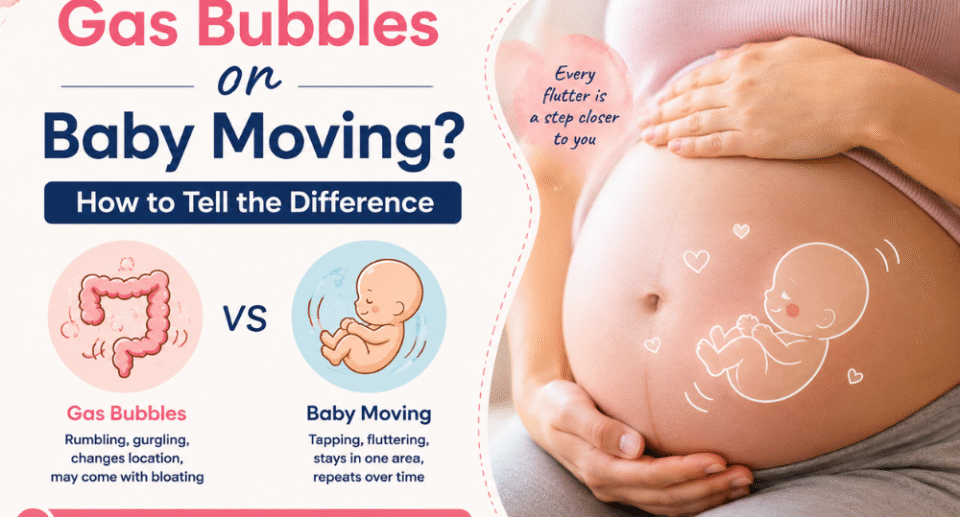
Was that tiny bubble in your belly gas, or did your baby just move? This question is very common, especially when you are waiting to feel your baby for the first time. Early baby movements can be surprisingly gentle. Instead of a clear kick, you might notice a flutter, tiny pop, soft tap, or bubbling feeling.
That is exactly why the difference between gas bubbles and baby moving can be difficult to recognize at first. Gas is usually connected to digestion and may come with bloating, stomach rumbling, burping, or passing gas. Baby movement tends to become more repeated, noticeable, and stronger as your pregnancy continues. There is no single trick that works every time. Looking at the feeling, timing, location, and other symptoms together can give you a much better idea of what is happening.
Gas Bubbles vs Baby Movement Quick Comparison
Here is a simple way to compare the two.
| Sign | Baby Moving | Gas Bubbles |
| Feeling | Fluttering, tapping, pulsing, rolling, nudging | Bubbling, rumbling, gurgling, pressure |
| When it happens | Often first noticed during the second trimester | Can happen at any time |
| Location | Often noticed lower in the abdomen at first | May move through different areas of the abdomen |
| Pattern | May repeat in one area | Often travels as digestion continues |
| Other symptoms | Usually no digestive symptoms | May come with bloating, burping, or passing gas |
| Over time | Becomes stronger and easier to recognize | Stays similar to other digestive sensations |
These differences are helpful clues, but they are not strict rules. Early baby movement really can feel like gas.
What Does Early Baby Movement Feel Like?
The first baby movements you notice are often called quickening. Many people begin noticing these movements sometime between about 16 and 24 weeks of pregnancy. Some people notice them earlier, especially if they have been pregnant before. First-time parents may take longer to recognize the feeling. Early movement may feel like:
- tiny bubbles popping
- butterflies in your stomach
- gentle fluttering
- soft tapping
- little pulses
- small muscle twitches
- light rolling
- a fish swimming inside your belly
- popcorn popping
The first movements may be so soft that you question whether they happened at all. You might feel one tiny flutter while sitting quietly, then nothing for several hours. Later, you might notice another soft tap in the same general area. As your baby grows, those uncertain sensations usually become easier to recognize.
What Do Gas Bubbles Feel Like During Pregnancy?
Gas can also become more noticeable during pregnancy. Changes in hormones may slow digestion. As pregnancy progresses, the growing uterus can also put additional pressure on the digestive system. Gas may feel like:
- bubbling
- gurgling
- stomach rumbling
- pressure
- fullness
- bloating
- mild cramping
- movement traveling through the abdomen
One useful clue is what happens before and after the sensation. If the bubbling happens along with bloating and then improves after you burp or pass gas, digestion is probably responsible.
6 Ways to Tell Gas Bubbles From Baby Movement
Since no single sign can give you a definite answer every time, consider several clues together.
1. Think About How Far Along You Are
Timing is one of the first clues. Baby movement often becomes noticeable during the second trimester. If you are around 16 to 24 weeks and suddenly start noticing unfamiliar little flutters, taps, or pops, you may be feeling your baby.
Your baby actually moves before this point. The movements simply may not be strong enough for you to notice yet. Very early in pregnancy, sensations that feel like bubbles are more likely to be related to digestion or other normal changes in your body.
2. Notice Whether the Feeling Travels
Gas often moves. You might feel bubbling in one place and then notice pressure somewhere else a few moments later. Baby movement can sometimes feel more focused. For example, you may notice: tap… tap… tap in roughly the same area. However, do not depend on location alone. Your baby moves and changes position frequently. As your uterus grows, you may feel movement in different areas of your belly.
3. Look for Other Signs of Gas
Ask yourself whether anything else is happening. Do you feel:
- bloated?
- unusually full?
- the need to burp?
- stomach rumbling?
- the need to pass gas?
- better after passing gas?
These signs make digestion a more likely cause. Baby movement itself normally does not cause bloating, burping, or the need to pass gas.
4. Pay Attention to Repeated Flutters
One small bubble can be almost impossible to identify. Repeated sensations can provide a better clue. You might feel a small tap and then another similar tap several minutes later. Over the next few days, you may notice the same sensation again. Eventually, the feeling begins to seem familiar. You may suddenly realize:
“That is the baby. I’ve felt that before.” Early movement can still be irregular, so you should not expect your baby to follow an exact schedule immediately.
5. See How the Feeling Changes Over the Following Weeks
Time often gives you the clearest answer. Gas continues to feel like gas. Baby movement develops.Those first tiny bubbles may gradually become:
- stronger taps
- nudges
- rolling movements
- stretching
- obvious kicks
A sensation you were unsure about at 18 weeks may feel completely recognizable a few weeks later.
6. Learn Your Baby’s Normal Pattern
As pregnancy progresses, you will start becoming familiar with the way your baby moves. Every baby is different. Some may seem more active in the evening. Others may become noticeable when you are sitting quietly or lying down. The important thing is not comparing your baby’s movement with someone else’s pregnancy. Instead, learn what feels normal for your baby.
Where Do You Feel Baby Movement First?
Early movement is often noticed in the lower abdomen. You may notice:
- flutters below the belly button
- a tiny tap on one side
- soft popping sensations
- gentle movement deep inside the lower belly
As your baby grows and changes position, the location can change. Later, movement may be felt:
- around the belly button
- along either side of your belly
- higher in the abdomen
- near your ribs
- lower in the pelvis
This is why location alone cannot tell you whether something is gas or your baby moving.
Can Placenta Position Change How Baby Movement Feels?
Yes. The placenta sits inside the uterus and provides an important connection that supports your baby’s growth throughout pregnancy. If your placenta is positioned toward the front of the uterus, it may cushion some of your baby’s movements.
Think of it as an extra layer between the baby and the front of your abdomen. Because of this, some movements may feel softer or take longer to recognize. You can still feel your baby with a front-positioned placenta. The earliest sensations may simply be less obvious.
What Does Baby Movement Feel Like at Different Stages?
The feeling usually changes as your baby grows.
Around 16 to 20 Weeks
This is often the biggest “baby flutters or gas?” stage.
You may notice:
- bubbles
- butterflies
- tiny pops
- light flickering
- gentle taps
- soft swirling
Some people recognize movement during this period. Others do not. Both experiences can occur.
Around 20 to 24 Weeks
Movements often start becoming easier to recognize. Those strange little bubbles may begin feeling more like:
- tapping
- nudging
- rolling
- small kicks
You may also start recognizing the difference between digestive activity and fetal movement more easily. If you reach around 24 weeks without ever noticing movement, speak with your pregnancy healthcare professional.
After 24 Weeks
Your baby is larger and stronger, so movements generally become more noticeable.You might feel:
- kicks
- rolls
- stretches
- pushing
- jerky movements
- changes in position
At this stage, knowing your baby’s normal movement pattern becomes especially important.
Can Baby Movement Really Feel Exactly Like Gas?
Yes, particularly in the beginning. That is why many parents do not immediately realize they have experienced their baby’s first movement. Imagine feeling a tiny bubble pop inside your lower abdomen. You might assume it is gas. Then you feel the same tiny pop again. A few days later, the popping becomes tapping. Several weeks later, those taps become obvious kicks. Looking back, you may realize those first mysterious bubbles were actually your baby.
Does Baby Movement Hurt?
Early baby movement usually feels gentle rather than painful. Later in pregnancy, stronger movements may sometimes feel uncomfortable, particularly when the baby kicks near the ribs or presses against certain areas. Movement can also feel different depending on:
- your baby’s position
- your body position
- where the placenta is located
- how far along you are
- the type of movement your baby is making
Sharp or persistent abdominal pain should not automatically be assumed to be normal baby movement. Contact a healthcare professional if you experience pain that concerns you.
Is It Gas If the Feeling Happens After Eating?
Not necessarily. Feeling bubbles shortly after eating can certainly be related to digestion. However, you may also notice your baby moving around the same time. Instead of using meal timing alone, check for other clues.
For example:
More likely gas:
You ate recently, your stomach feels bloated, you hear rumbling, and the sensation travels through your abdomen.
More likely baby movement:
You feel several small, focused taps without other digestive symptoms, and the same sensation has been appearing repeatedly over several days. Again, these are clues rather than guarantees.
Why Is Baby Movement Easier to Notice When You Are Resting?
Many parents notice movement more clearly when they stop moving themselves. When you are walking, working, exercising, or completing everyday tasks, small movements can be easy to miss.When you sit or lie quietly, subtle sensations become more noticeable. That does not necessarily mean your baby suddenly became more active. You may simply be more aware of what is happening inside your body.
What If You Still Cannot Tell Whether It Is Gas or Baby Movement?
You do not need to identify every tiny sensation. During the early stages, being unsure is completely understandable.
Pay attention over the next several days and weeks. If the sensation is coming from your baby, it will generally become easier to recognize as pregnancy progresses.
Today’s mysterious bubble may eventually become tomorrow’s unmistakable kick.The important thing is not to become anxious about identifying every movement correctly.
When Should You Contact Your Healthcare Professional?
There is an important difference between being unsure about early quickening and noticing reduced movement after you have become familiar with your baby’s pattern. Contact your maternity healthcare professional promptly if:
- your baby is moving noticeably less than usual
- you can no longer feel your baby moving
- your baby’s normal movement pattern changes
- you have reached around 24 weeks without ever feeling movement
- you are worried about your baby’s movement for any reason
Once you know your baby’s usual pattern, do not assume a noticeable reduction in movement is simply gas.
It is always reasonable to contact your healthcare professional when something feels different or concerning.
Preparing for the Next Stage With Your Baby
Feeling those first movements can make pregnancy suddenly feel much more real. Before long, the tiny flutters you are trying to identify may become strong kicks. Then your attention gradually turns toward birth and caring for your newborn.
Learning about things before your baby arrives can make that transition easier. For example, understanding your newborn’s stomach size and early feeding needs can help you know what to expect during the first days after birth.
Aashley Kai is the Editorial Director of Chelsea Famous Parenting and a licensed expert in early childhood education. She holds a Master’s in Child Psychology from the University of Texas Southwestern Medical Center and has worked as a preschool teacher and child therapist. Since joining in 2024, Aashley has been dedicated to creating well-researched, trustworthy parenting resources. Her work helps parents and caregivers foster nurturing, educational environments for children. Outside of work, she enjoys hiking and photography, capturing nature from a child’s perspective.