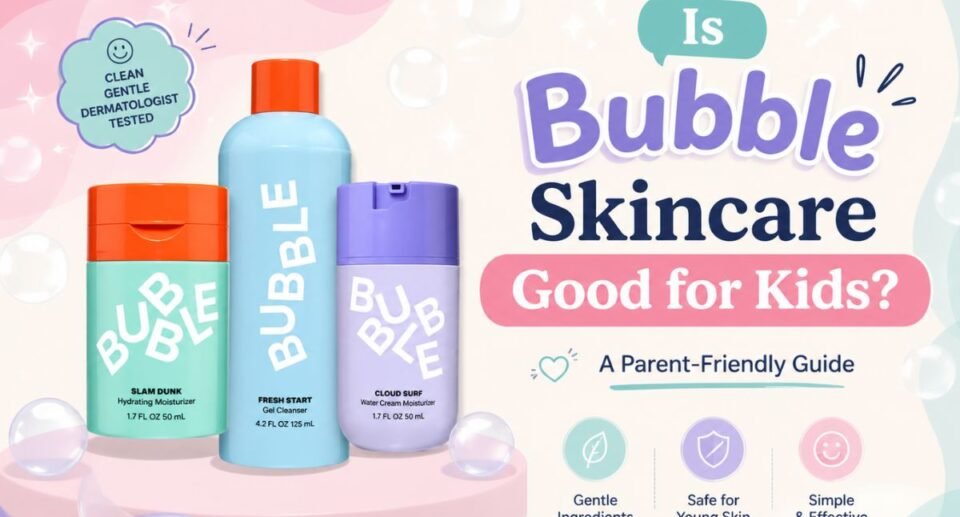
Bubble Skincare is colorful, fun, affordable, and very popular with tweens and teens. So it is not surprising that many parents are asking the same question: is Bubble Skincare good for kids? The honest answer is: some Bubble products may be okay for older kids and teens, but most children do not need a full Bubble skincare routine. For younger kids, simple is usually safer. A gentle cleanser, moisturizer when needed, and daily sunscreen are enough for most children. Bubble is not automatically bad for kids. The real issue is choosing the right product for the right age. A basic cleanser or moisturizer is very different from an exfoliating mask, acne serum, or brightening treatment.
Quick Answer: Is Bubble Skincare Safe for Kids?
Bubble skincare for kids can be safe in limited situations, especially when parents choose gentle products and avoid strong active ingredients. But it should not be treated like a toy or a trend.
For most kids, the safest routine is:
- Gentle cleanser
- Simple moisturizer
- Broad-spectrum sunscreen
That matches what dermatologists often recommend for tweens and teens. The American Academy of Dermatology says young skin should usually stick with gentle cleanser, lightweight moisturizer, and broad-spectrum sunscreen. It also recommends avoiding adult-style active ingredients like retinol, vitamin C, and exfoliating acids unless a dermatologist suggests them.
So, if your child wants Bubble because of TikTok or friends, the answer is not “buy everything.” The better answer is: start small, choose gentle products, and avoid treatment products unless there is a real skin need.
Why Kids’ Skin Needs a Simpler Approach
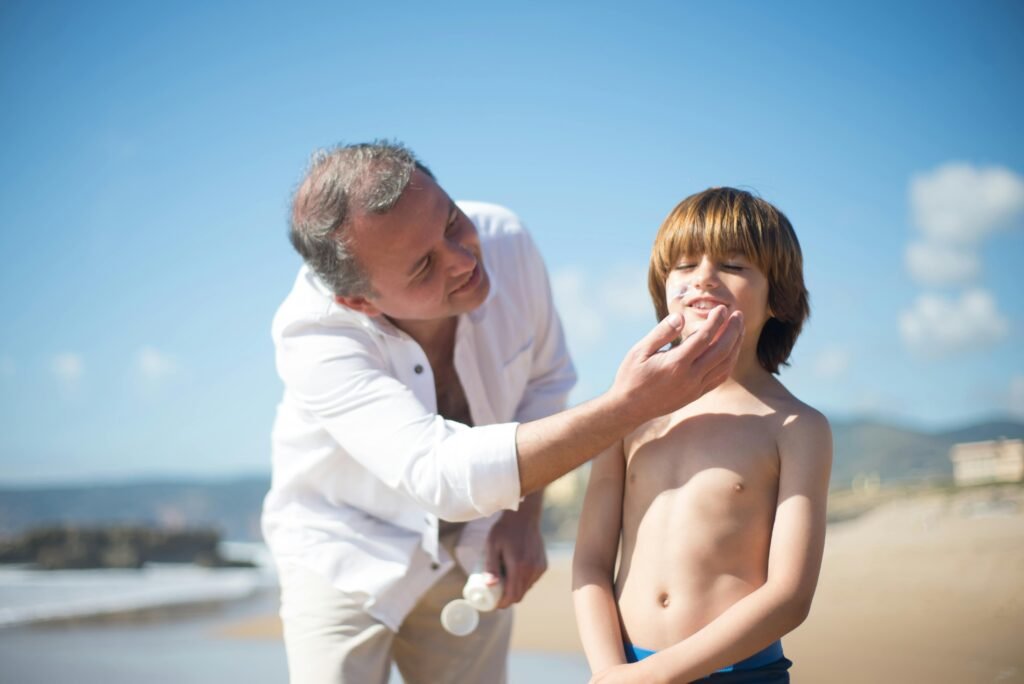
Children’s skin is not the same as adult skin. It can be more sensitive, more reactive, and easier to irritate. Many adult skincare products are made for problems children do not have, such as wrinkles, dark spots, dullness, or sun damage.
Children’s Health recommends a “less is more” approach. For kids under 10, basic hygiene, moisturizer if the skin is dry, and sunscreen of at least SPF 30 are usually enough. Around the tween years, ages 10 to 12, a gentle daily face cleanser may be added if needed.
That is why kids usually do not need:
- Toners
- Serums
- Exfoliating masks
- Anti-aging products
- Brightening treatments
- Multiple acne products at once
A long routine may look fun online, but it can lead to dryness, redness, stinging, peeling, or breakouts.
What Bubble Says About Its Products
Bubble presents itself as dermatologist-developed skincare. Its site says its formulas are created with board-certified dermatologists and are clinically tested. Bubble also says not all products are recommended for faces under 14, but many are specifically approved for all ages. This is an important point. It means parents should not assume every Bubble product is equally suitable for kids.
Bubble’s “Every Face Routine” includes Fresh Start Gel Cleanser, Slam Dunk Hydrating Cream Moisturizer, and Solar Mate Invisible Daily Mineral Sunscreen SPF 40. Bubble says this routine is suitable for all skin types, including faces under 13. That routine makes more sense for kids than products with stronger active ingredients.
Which Bubble Products Make the Most Sense for Kids?
For kids or young tweens who really want to try Bubble, the safest place to start is with basic products.
1. A gentle cleanser
A gentle cleanser can help if your child is starting to get oily skin, sweat buildup, or mild clogged pores. It should not leave the skin tight, burning, or dry.
For younger kids, cleanser is not always needed every morning and night. Sometimes plain water in the morning and gentle cleansing at night is enough.
2. A moisturizer
A moisturizer can help if your child’s skin feels dry, tight, or flaky. Look for something simple and comfortable. Avoid layering several creams, oils, and serums together.
3. Sunscreen
Sunscreen is the most useful skincare habit for kids and teens. It protects the skin and builds a healthy habit early. CHOC recommends a noncomedogenic sunscreen with SPF of at least 30 for preteens and teens.
Bubble’s Every Face Routine includes a broad-spectrum SPF 40 sunscreen as the final morning step.
Bubble Products Parents Should Be More Careful With
Some Bubble products are not simple basics. They are treatment products. These may be better for older teens or for specific skin concerns. For example, Bubble’s Deep Dive AHA + PHA Exfoliating Mask is recommended for ages 14+, and Bubble says anyone younger than 14 should talk to a dermatologist before using it.
Bubble also sells acne products with 2% salicylic acid, such as Super Clear and All Clear. Salicylic acid can be useful for acne, but it can also dry or irritate young skin if used too often or without guidance. Bubble’s own Super Clear instructions say to patch test, use only one acne treatment at a time, and reduce use if dryness or peeling happens. This does not mean these products are bad. It means they should be used for the right reason, at the right age, and with baby care.
Ingredients Parents Should Watch Closely
When checking Bubble skincare for kids, do not only look at the packaging. Look at the product type and ingredient purpose.
Retinol
Kids do not need retinol for anti-aging. It can irritate young skin and cause dryness or peeling. Dermatology sources often recommend avoiding it for tweens unless a doctor specifically advises a retinoid for acne.
Vitamin C
Vitamin C is often used for brightening and uneven tone. Most kids do not need it. CHOC lists vitamin C among ingredients preteens and teens should avoid in general skincare routines.
AHAs and BHAs
AHAs and BHAs are exfoliating acids. They can help with texture or clogged pores, but they can also damage the skin barrier if overused. CHOC warns that retinol and exfoliating acids can over-dry young skin and damage the skin barrier.
Salicylic acid
Salicylic acid is a BHA often used for acne. It may help older tweens or teens with real breakouts, but it should not be used just because it is trendy. Start slowly and stop if the skin becomes irritated.
Fragrance and harsh scrubs
Fragrance is not always a problem, but kids with sensitive skin, eczema, allergies, or frequent rashes may do better with fragrance-free products. Harsh scrubs should also be avoided because they can irritate the skin.
A Safe Bubble Skincare Routine by Age
Under 10 years old
Most kids under 10 do not need Bubble skincare. A simple routine is better:
Morning:
- Rinse face if needed
- Moisturizer if dry
- Sunscreen before outdoor time
Night:
- Gentle wash if sweaty or dirty
- Moisturizer if dry
For this age, skip serums, toners, acne treatments, exfoliating masks, and brightening products unless a doctor recommends them.
Ages 10 to 12
This is the age when many kids start asking for skincare because of friends, YouTube, TikTok, or Sephora-style trends.
A safe routine can be:
Morning:
- Gentle cleanser or water
- Moisturizer if needed
- Sunscreen
Night:
- Gentle cleanser
- Moisturizer
If you choose Bubble, stay with simple products like a gentle cleanser, moisturizer, and sunscreen. Avoid exfoliating masks and acne treatments unless there is a real skin issue.
Ages 13 to 14
At this age, some teens start dealing with oiliness, clogged pores, or mild acne. Bubble may make more sense here, but the routine should still stay simple.
A good routine can be:
Morning:
- Gentle cleanser
- Lightweight moisturizer
- Sunscreen
Night:
- Gentle cleanser
- Moisturizer
- Acne product only if needed
Do not add several actives at the same time. If using a salicylic acid product, start slowly and watch for dryness.
Teens 14+
Older teens with acne, oily skin, or texture concerns may use more targeted products. Still, more products do not always mean better results.
For teens, the best rule is: one concern, one treatment, slow introduction.
For example, if acne is the main concern, use one acne product. Do not combine multiple acids, scrubs, masks, and spot treatments in the same week unless a dermatologist recommends it.
How to Patch Test Bubble Skincare
Patch testing is simple and helpful, especially for kids with sensitive skin.
Here is how to do it:
- Apply a small amount of the product behind the ear or along the jawline.
- Wait 24 to 48 hours.
- Watch for redness, itching, swelling, burning, or bumps.
- If the skin reacts, do not use it on the full face.
- If there is no reaction, use it slowly.
The American Academy of Dermatology also recommends introducing one new product at a time so you can see if the skin tolerates it.
Signs Bubble Skincare Is Too Strong for Your Child
Stop using the product if your child notices:
- Burning
- Stinging
- Redness
- Peeling
- Itching
- New bumps
- Dry, tight skin
- Rash
- Worsening acne
A little adjustment period is not something kids should be forced to tolerate. If a product hurts, it is usually not the right product.
The Social Media Problem Parents Should Know About
Many kids want skincare because they see routines online. The problem is that social media routines are often too long and too expensive.
A 2025 American Academy of Pediatrics study found that TikTok skincare routines featuring young creators used an average of 6 products, cost an average of $168 per routine, and included sunscreen in only 26.2% of videos. The study concluded that these routines often expose pediatric audiences to irritating ingredients and offer little to no benefit.
That is important because the most useful skincare step for kids is often the one social media skips: sunscreen.
When to See a Dermatologist
See a dermatologist or pediatrician if your child has:
- Painful acne
- Acne leaving dark marks or scars
- Eczema
- Frequent rashes
- Burning after many products
- Severe dryness
- Skin picking from acne stress
- Breakouts that do not improve after a simple routine
A doctor can suggest the right treatment without guessing or buying multiple products.
What Parents Should Remember Bubble Skincare is not automatically unsafe for kids, but it is also not something every child needs. For young kids, simple skincare is better. For tweens, gentle basics may be fine. For teens with acne or oily skin, selected Bubble products may help, but strong actives should be used carefully.
The best approach is simple:Start with cleanser, moisturizer, and sunscreen. Add only one product at a time. Avoid adult-style actives unless there is a real reason. Watch your child’s skin more than the trend. That is the safest way to think about Bubble skincare for kids.
FAQs
Some gentle Bubble basics may be okay, but most 10-year-olds do not need a full Bubble routine. A gentle cleanser, moisturizer, and sunscreen are usually enough.
It can be okay if you choose gentle products and avoid strong treatments. Keep the routine simple and do not use exfoliating masks, brightening serums, or acne actives unless needed.
Older tweens or teens with acne may use salicylic acid carefully, but younger kids should avoid it unless a doctor recommends it. Start slowly and stop if dryness or peeling happens.
A broad-spectrum sunscreen can be a useful step for kids. Bubble’s Solar Mate is part of its Every Face Routine, which Bubble says is suitable for faces under 13.
Most kids do not need toner. If the skin is healthy, cleanser, moisturizer, and sunscreen are enough.

Aashley Kai is the Editorial Director of Chelsea Famous Parenting and a licensed expert in early childhood education. She holds a Master’s in Child Psychology from the University of Texas Southwestern Medical Center and has worked as a preschool teacher and child therapist. Since joining in 2024, Aashley has been dedicated to creating well-researched, trustworthy parenting resources. Her work helps parents and caregivers foster nurturing, educational environments for children. Outside of work, she enjoys hiking and photography, capturing nature from a child’s perspective.