Self-Defense for Kids: What Children Really Need to Learn to Stay Safe
When parents hear self-defense for kids, they often picture punches, kicks, and martial arts classes. That is not the best place to start. For children, real self-defense is usually much simpler than that. It means noticing when something feels wrong, using a strong voice, getting away, finding safe people, and telling a trusted adult what happened. Physical techniques can have a place, but they are not the foundation. The foundation is awareness, boundaries, and practiced habits. Child-safety experts consistently put those pieces first.
That matters because fear can push parents toward the wrong lessons. The American Academy of Pediatrics notes that stranger abductions are rare, and that many kidnappings involve someone the child already knows. So the goal is not to raise a suspicious little bodyguard. The goal is to raise a child who can spot problems, trust their instincts, and get help fast.
What kids Should do First in an Unsafe Situation
The first rule of kids’ self-defense is not “fight back.” It is break the situation early. A child’s first moves should be simple: stop, create distance, use a loud voice, head toward other people, and tell a trusted adult right away. The AAP advises teaching children to say no forcefully, move away as fast as possible, and yell for help. NCMEC’s child-safety framework makes the same basic point in kid language: check first, take a friend, tell people no, and tell a trusted adult.
That sounds basic because it is basic. And basic is good. Under stress, children do not rise to the level of a fancy technique. They fall back on what they have practiced.
The Safest Self-Defense Skills are Often the Simplest
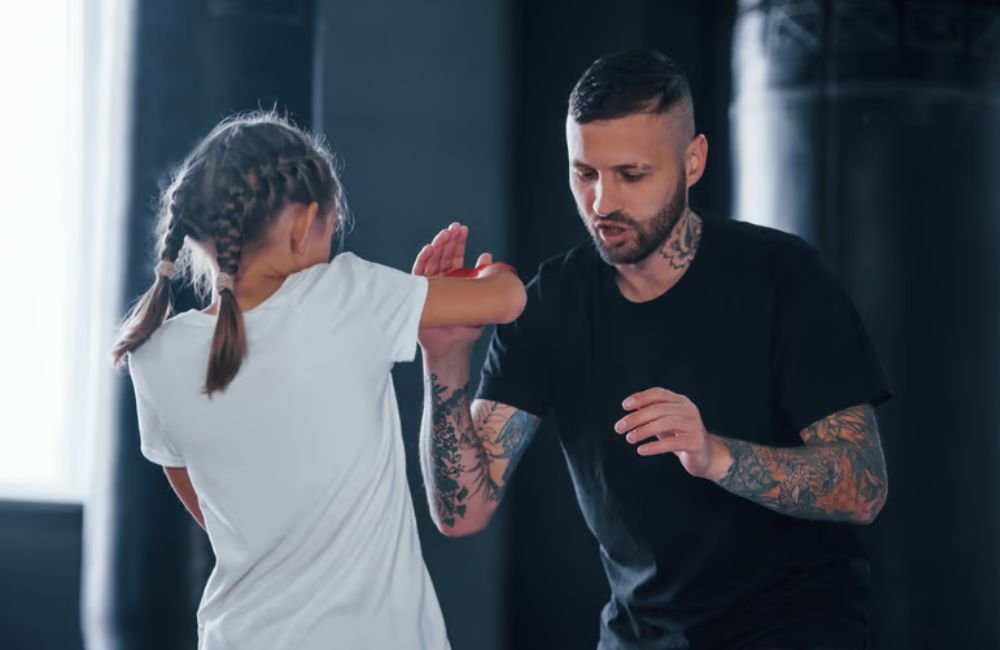
The most useful self-defense skill for many kids is body autonomy. A child should know that their body belongs to them. They should know the proper names for body parts, know that they can say no to unwanted touch, and know that uncomfortable secrets should be told to a trusted adult. The AAP and RAINN both emphasize these points because they help children recognize unsafe behavior earlier and report it sooner.
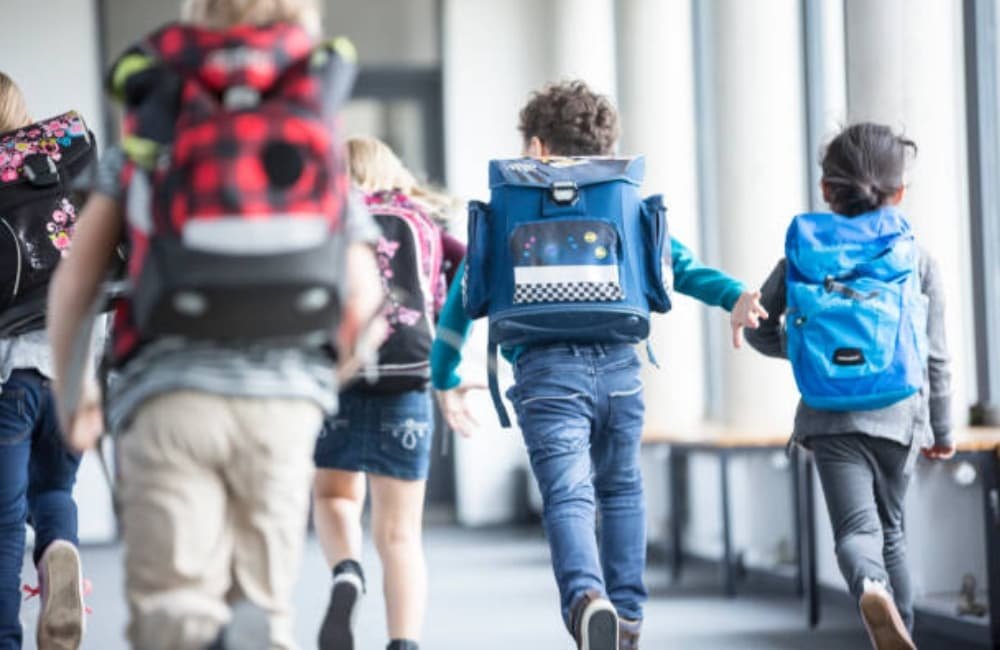
Another strong layer is anti-bullying skill, which is really a mix of confidence, boundaries, and getting adults involved before a problem gets bigger. Bullying remains common, especially in middle school. Recent federal data shows meaningful levels of in-school and repeated bullying, with middle school students affected more than high school students. That does not mean every child is in danger all the time. It means safety skills are not overkill. They are part of ordinary childhood resilience.
Then there is the piece many kids self-defense articles barely cover: online safety. The AAP notes that children can interact online with people they do not really know, and that photos, location settings, and casual sharing can reveal more than kids realize. A child who learns personal safety only in the playground sense is missing half the picture.
What to Teach by Age
A useful way to teach self-defense is to match the lesson to the child’s age. This is not a rigid medical formula. It is a practical teaching framework built around how child-safety groups and pediatric sources advise parents to start early, repeat often, and keep the message age-appropriate.
Ages 3–6
At this age, self-defense should look a lot like body-safety education. Teach your child the names of body parts. Teach that some touch is okay and some touch is not. Teach that they can say “No, I don’t like that,” even to adults. Teach that they should check first before going anywhere with someone else. And teach them who their trusted adults are. Keep the tone calm and simple. NCMEC’s materials specifically warn against overwhelming young children with scary messaging.
Ages 7–10
This is a good age to practice specific safety habits. Walk through what to do if someone offers a ride, asks for help finding a pet, or tells them to keep a secret from their parents. NCMEC highlights these exact kinds of approach tactics and recommends practicing “check first,” “take a friend,” and “tell a trusted adult.” It is also the right age to practice a strong voice. Not aggression. Not intimidation. Just a clear, firm “No,” “Stop,” or “I need help.” That is self-defense too. In many situations, it is the part that works fastest.
Ages 11–14
Older kids need everything younger kids need, plus better judgment about peers, phones, pressure, and reputation. They should understand boundaries, consent, grooming red flags, location sharing, and when to leave a social situation before it turns ugly. RAINN recommends teaching body autonomy, encouraging open communication, noticing grooming behaviors, and monitoring adult-child interactions. The AAP adds that children should be taught not to share location settings broadly and to be careful with digital sharing. This is also the age when some kids will resist “safety talks” because they sound childish. Fine. Drop the lecture voice. Frame it as judgment, not obedience. Smart beats tough every time.
Are Martial Arts Good for Kids? Yes, With the Right Expectations
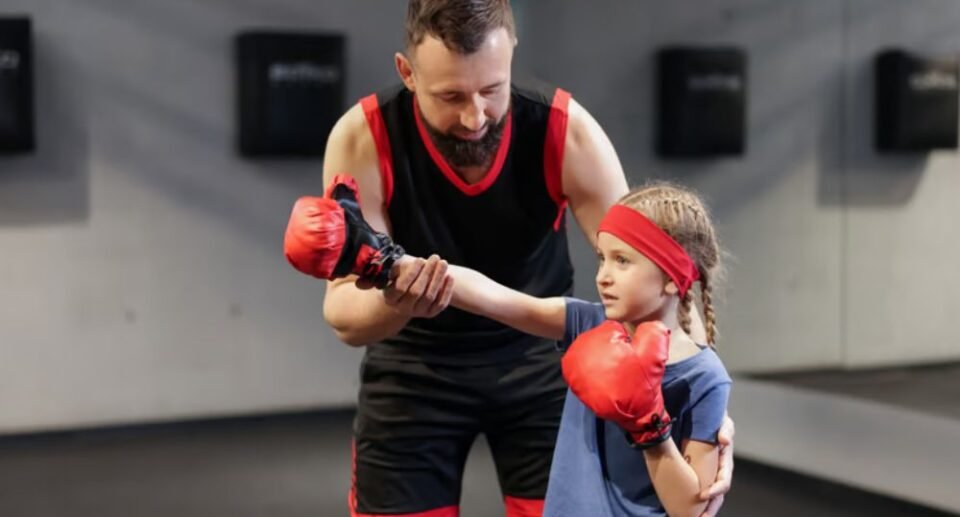
Martial arts can be excellent for kids. The AAP says they can support reduced stress, physical fitness, school performance, and motor and cognitive development. Understood also highlights benefits like self-control, concentration, structure, and confidence.
But here is the part the SERP often muddies: martial arts are not magic, and not all programs are equally appropriate. The AAP says MMA should generally be discouraged for young participants because of the higher risk of serious injury. It also recommends focusing first on non-contact form and skill brain development for toddlers before sparring or contact work.
So if you are choosing a class, look for a program that emphasizes character, boundaries, self-control, and age-appropriate progression. Understood recommends supportive instruction, low student-to-teacher ratios, and a character-development mindset. That is a much better filter than “Which class teaches the most dangerous moves?”
The Best Self-Defense Against Bullying is Not a Spinning Kick
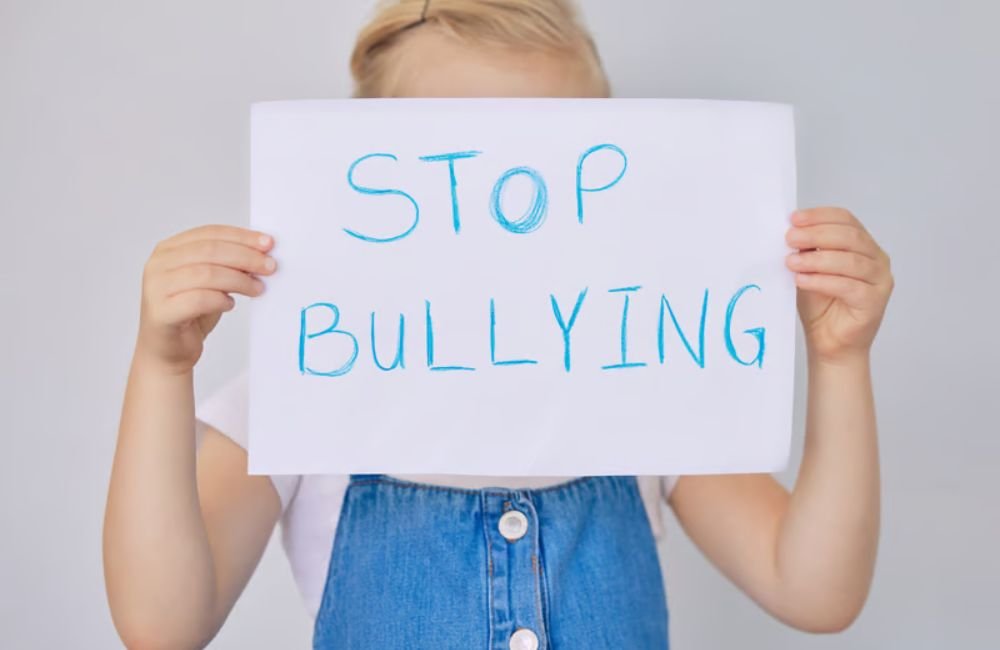
A lot of parents say they want self-defense because their child is being bullied. Fair enough. But bullying is usually not solved by turning your child into a tiny action hero.
The better approach is layered. Teach your child to stay near other people, use direct language, leave when they can, document patterns, and tell adults early. If bullying happens at school, involve the school before the situation hardens into a routine. Federal anti-bullying laws departments also note that many incidents go unreported, which means adults often know less than they think.
That is one reason confidence matters so much. Not fake confidence. Real confidence. The kind that lets a child speak clearly, hold a boundary, and ask for help without feeling weak.
What Parents Should Say After a Scary Incident
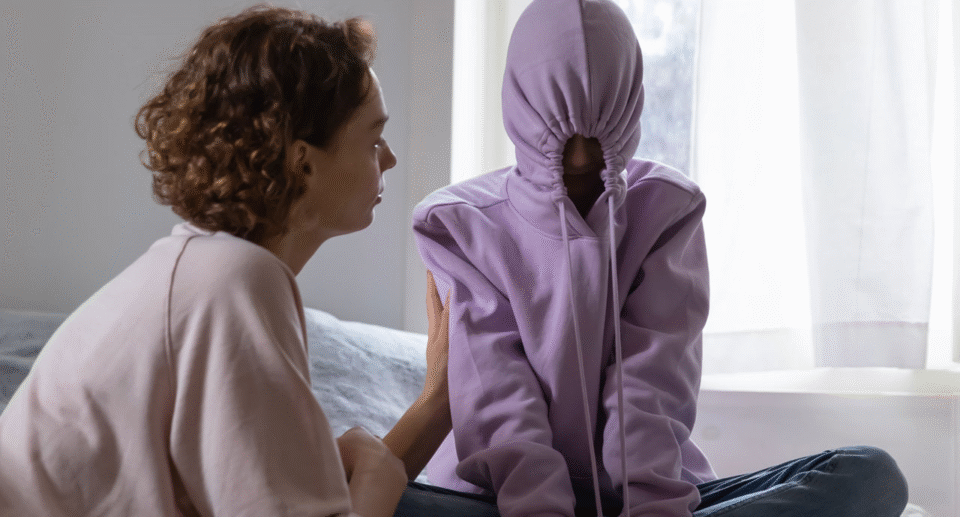
This part is badly under-covered online, and it matters a lot. If your child tells you about a scary situation, start here: “I’m glad you told me. You’re not in trouble. We’ll handle it together.” That matches AAP and RAINN guidance, which stresses that children should know they can tell you anything and that they will be believed and protected.
If your child froze, do not shame them. RAINN explains that freeze is an automatic survival response, not a chosen failure. That is a crucial point. Kids do not need a performance review after a frightening moment. They need safety, calm, and a better plan for next time.
If your child stayed silent for a while, do not overreact. Children often delay telling because they feel confused, embarrassed, or afraid of getting in trouble. Your job is to keep the door open, not slam it shut with panic.
A Simple family Safety Plan any Parent can Start this Week
You do not need a twelve-week seminar to teach useful self-defense habits. Start with five family rules:
- We listen when something feels off.
- We do not go anywhere with someone unless we check first.
- We use a loud voice when we need help.
- We move toward safe people, not away into isolation.
- We tell a trusted adult every time, even if it feels small.
Then practice. Not in a dramatic way. Just short, calm repetition. Ask, “What would you do if someone offered you a ride?” “What would you do if someone online asked where you live?” “What would you say if a grown-up wanted a hug and you didn’t want one?” Practice is what turns safety from information into behavior.
With Ten years of experience, Ryker Storm is a certified fitness specialist dedicated to helping clients achieve their fitness and wellness goals. Specializing in strength training, weight management, and injury prevention, Ryker Storm uses a personalized, evidence-based approach to create effective training programs. Certified by National Academy of Sports Medicine (NASM), American Council on Exercise (ACE), and Functional Movement Systems (FMS), Ryker Storm combines expertise in exercise science and nutrition to help clients build sustainable habits for long-term success. Known for their commitment to safety and client results, Ryker Storm stays updated with the latest fitness research to ensure top-quality coaching.