
Creative Ways to Involve Children in Decorating with String Lights

Engaging children in home decorating projects can encourage creativity, confidence, and cooperation in a relaxed family setting. Simple activities with string lights provide age-appropriate opportunities for bonding and self-expression. With an appropriate approach, shared decorating time can often be both safe and enjoyable for kids of various ages.
Decorating with your child can open the door to collaborative problem-solving and positive interaction. Making time for shared projects may help children learn to negotiate decisions and feel valued for their ideas. Choosing fairy lights as a decorating tool offers flexibility, allowing you to add warmth and personality to a space while encouraging kids to take on creative roles. String lights, when used safely and thoughtfully, can spark children’s imaginations and support family routines around the home.
Establishing a successful child-led decorating experience
Setting up decorating zones at home helps make the process manageable and organised. By focusing on one small area, such as a corner, shelf, or window bay, you give your child a clear space to express themselves without feeling overwhelmed. This approach also makes it easy to supervise and adjust as needed.
Working together to plan colour schemes and simple themes can increase your child’s excitement while teaching them about balance and visual harmony. Offer a few structured choices, such as mixing two colours or deciding which objects to feature, to help guide the process. Prepare materials in advance, ensuring any items within reach are safe and suitable for your child’s age and abilities.
Creating a visual mood board or inspiration collection before beginning can help children understand the decorating process and feel more invested in the outcome. Gather images from magazines, printed photographs, or drawings that reflect possible themes, colours, or arrangements. This preparatory step allows children to communicate their preferences more clearly and gives them a reference point throughout the project. Consider using a large piece of cardboard or poster board where children can arrange their chosen images, fabric swatches, or colour samples alongside sketches of where string lights might be positioned. This tangible planning tool transforms abstract ideas into concrete possibilities and helps manage expectations while building anticipation for the actual decorating day.
Designing tasks according to children’s developmental stages
Assigning roles based on age can help children feel successful and reduce frustration. Toddlers may enjoy handing you unlit string lights or choosing between two possible locations. Playing online games like ‘spot the place’ encourages participation even at a young age.
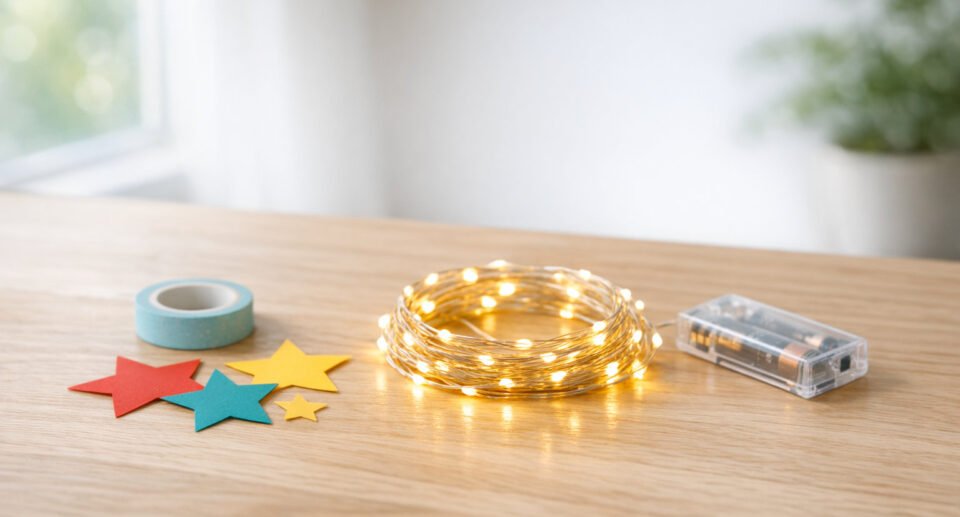
Preschoolers can assist in creating patterns or matching coloured objects along the lights. For primary-age children, measuring out lengths or cutting paper shapes integrates practical skills with artistic decisions. Older children might photograph design options, suggest layouts, or supervise part of the display, offering support to younger siblings while developing leadership skills.
Creative displays children can help bring to life
Inviting children to lead the design of a story nook can make reading spaces more appealing and personal. Adding soft textiles alongside string lights often encourages a sense of ownership and comfort in the area. A display shelf featuring child-made crafts and seasonal drawings may become a rotating gallery and a source of pride for the whole family.
Combining paper garlands and shapes designed by children with gentle lighting can foster both creativity and fine motor development. A well-defined calm corner in the bedroom or playroom, made inviting with string lights and favourite objects, gives kids a sense of control and a positive place to wind down. Involving them in setting up these spaces can strengthen routines and give practical purpose to their efforts.
Balancing safety, learning, and harmonious teamwork at home
Educational value can be introduced naturally by including counting, sequencing, and simple design principles as you decorate together. Explaining decisions out loud demonstrates how to weigh options, while allowing your child to lead small choices can boost their confidence. Involving them in tidying and resetting the area may teach responsibility without making the activity feel like an extra chore.
Model clear safety rules by instructing children not to handle plugs or switches and by supervising their use of string lights at all times. Keeping lights away from sleep spaces and out of walkways can reduce the risk of accidents. Encouraging your child to join the end-of-day check routine and help with safe storage helps reinforce good habits.
Managing interactions between siblings is often easier by dividing responsibilities, like taking turns with roles or having brief decorating shifts to maintain fairness. Prepare for changing attention spans by allowing quick breaks or switching to small, simple tasks if needed. A positive wrap-up, such as a family ‘reveal’ moment, helps everyone appreciate their contributions and can create fond memories for the family.
Aashley Kai is the Editorial Director of Chelsea Famous Parenting and a licensed expert in early childhood education. She holds a Master’s in Child Psychology from the University of Texas Southwestern Medical Center and has worked as a preschool teacher and child therapist. Since joining in 2024, Aashley has been dedicated to creating well-researched, trustworthy parenting resources. Her work helps parents and caregivers foster nurturing, educational environments for children. Outside of work, she enjoys hiking and photography, capturing nature from a child’s perspective.